When a Raise Doesn't Change Much: Giving Every Dirham a Place
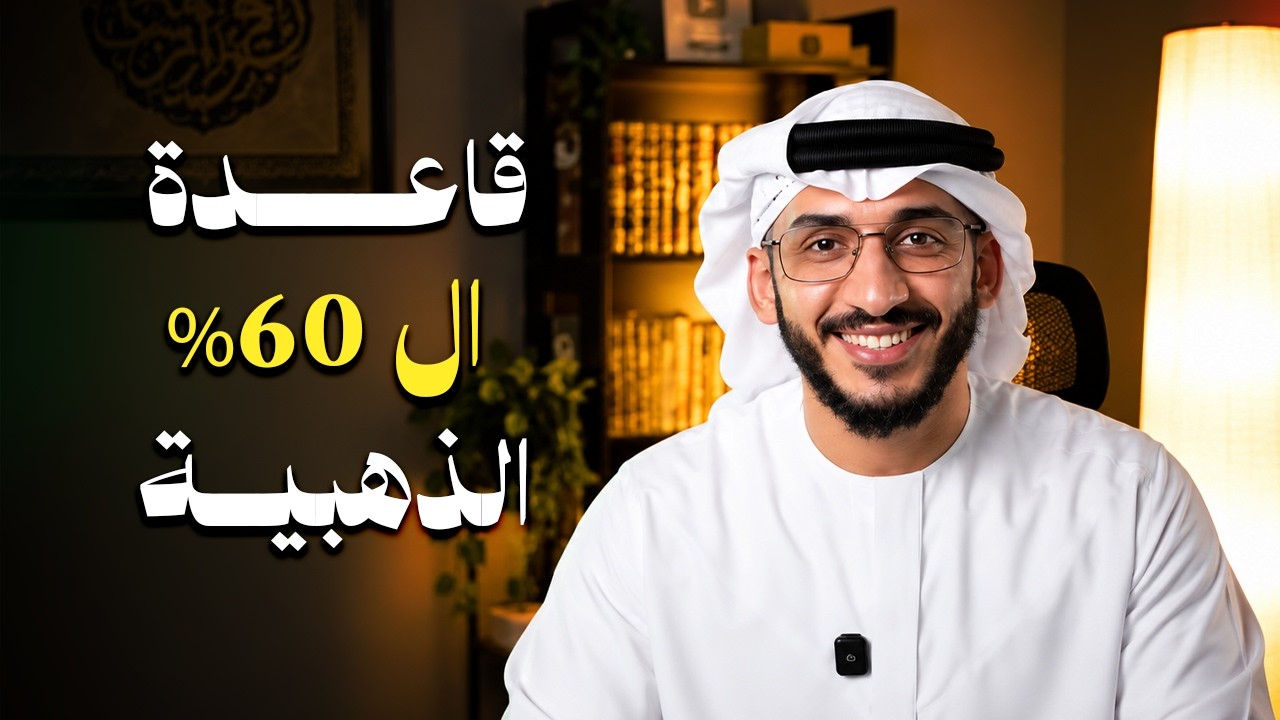
Many people know the feeling: the salary goes up, and a year later the bank balance looks much as it did before. Ali Alhamed’s video “Your salary went up but your finances didn’t improve? The 60% rule that changes everything” starts from that exact problem. According to the chapter list in its description, the video moves from the basics of managing money, through splitting income into four places, a 60% rule for commitments, spending on extras without guilt and the size of an emergency fund, to investing in assets that produce income, compounding and putting profits back to work, a look at gold and a property example, and finally repeating the plan on the way to early retirement. This article is a companion to the video. It explains the general ideas behind those headings; for how Ali himself applies them, the video is the place to go.
Why a raise often disappears
When income rises, spending tends to rise with it, quietly and without a decision. A slightly bigger car, a more expensive phone plan, more meals out, a new subscription or two. None of these feels large on its own, but together they can absorb a raise completely. The result is a higher income with the same lack of breathing room.
The video’s chapters include a story about 13,000 dirhams that their owner could not account for, and a question meant to reveal whether someone has a problem managing money. The point behind both is simple: the issue is often not how much comes in, but whether anyone has decided where it goes. Money without a job tends to find one on its own, usually in spending that leaves nothing behind.
A useful first step is just to look. Going through a few months of statements and sorting every payment into a handful of groups often shows more than any rule could. Many people are surprised by how much leaves their account in small, repeated amounts.
Four places for every salary
The video divides money into four places. The labels can vary, but the idea follows the chapters of the description: commitments, extras, an emergency fund, and investing.
- Commitments. Rent, bills, school fees, family support, transport, and any instalments already agreed. These are the payments that arrive whether or not the month went well.
- Extras. The things that make life pleasant but are not essential: outings, gifts, travel, hobbies.
- The emergency fund. Money set aside for the unexpected, such as a job loss, a medical bill or an urgent repair.
- Investing. Money that goes into assets meant to produce income or grow over the long term.
Giving each part of the salary a place at the start of the month, rather than seeing what is left at the end, changes the order of priorities. Saving and investing stop being whatever survives the month and become planned parts of it.
Keeping commitments under control
The video’s title centres on a 60% rule for commitments. The exact way Ali sets and uses it is explained in the video itself, but the reasoning behind any ceiling of this kind is easy to see. When fixed commitments take up most of the income, there is little room left for the emergency fund or for investing, and any surprise turns into a crisis. Keeping commitments within a clear share of income protects the other three places.
This is also where many raises are lost. A new loan or a larger monthly instalment signed soon after a pay rise can tie up the extra money for years. For a Muslim there is a second question as well: many conventional loans and credit cards charge interest, which is riba and prohibited. Avoiding new interest-bearing debt is both a financial and a religious safeguard, and where someone already has such debt, asking a qualified scholar about the best way to deal with it is wiser than guessing.
Extras without guilt, and a fund for the unexpected
A budget that leaves no room for enjoyment is hard to keep. One of the video’s chapters asks how much can be spent on extras without feeling guilty. Setting a clear amount for extras has an advantage: within that amount the money can be spent freely, and outside it the answer is already known. The aim is balance, not deprivation.
The emergency fund is the cushion that keeps the whole plan standing. The chapter list asks whether it should cover 3, 6 or 12 months. The right size depends on a person’s situation: how stable the income is, how many people depend on it, and how large the fixed commitments are. Someone with a single, less secure income usually needs a bigger cushion than someone with steady income and few dependants. This money should be easy to reach and kept away from risk, and for a Muslim it should not sit in an account that pays interest.
Investing: owning things that produce income
Only after commitments, extras and the emergency fund are in place does the fourth place come in. The video describes investing as buying assets that bring in income, and its chapters mention two types of assets and when each one is needed. The general principle is that investing means owning something real, such as a share in a business or a property, rather than lending money for interest.
The chapters also cover compounding and why profits should be reinvested. When the income an asset produces is put back to work rather than spent, it begins to earn in turn, and over many years that effect can matter more than the starting amount. Compounding needs time and patience, which is why starting early and steadily matters more than starting big.
The video goes on to look at gold, testing the common belief that “gold always goes up” against figures since 1979, and comparing jewellery with bullion. It also walks through a property example. These are Ali’s own examples and illustrations, not results anyone should expect to repeat, and any asset, gold and property included, can fall in value as well as rise. For halal investing, every choice also needs to pass Shariah screening: a permissible activity, no riba, and no excessive uncertainty. Where scholars differ on a detail, asking a qualified scholar is the safer path.
What to take away
- Look at a few months of spending before setting any rule; knowing where money goes comes first.
- Give every part of the salary a place at the start of the month: commitments, extras, emergency fund and investing.
- Keep fixed commitments within a clear share of income, and be careful with new instalments after a raise, especially interest-bearing ones.
- Allow a set amount for extras so the plan is one that can actually be kept.
- Size the emergency fund to the household’s situation and keep it safe and accessible.
- Treat investing as owning real, permissible assets, reinvest the income they produce, and give it years.
- Repeat the plan with every raise, little by little, without rushing.
For answers to common questions on riba, Shariah screening and purification, see the halal investing FAQ, and the full video is on Ali’s YouTube channel.