Shortening the Path Without Risking What You Have Built
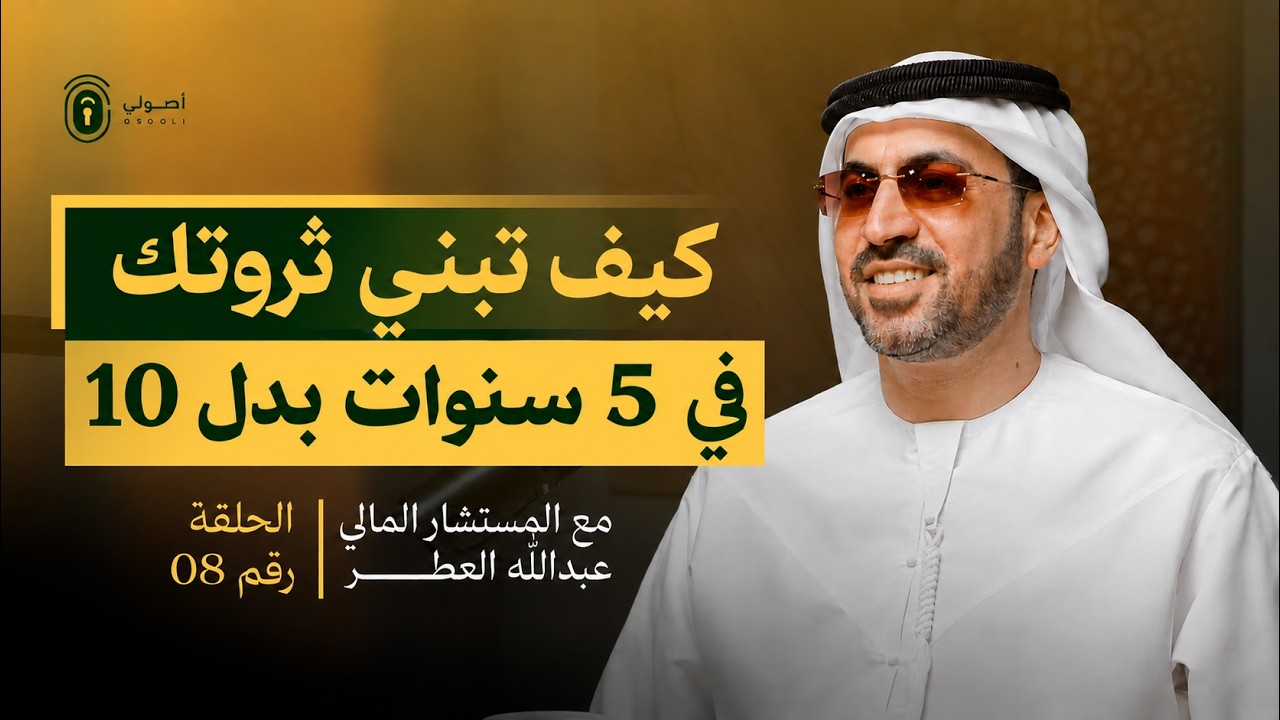
Almost everyone who saves for long enough starts to wonder whether there is a faster way. A recent podcast episode on Ali Alhamed’s channel, titled “How do you build your wealth in 5 years instead of 10?”, takes up that question. According to its description, the episode is meant for anyone who already has an income and a monthly surplus and wants to understand how to shorten the path to building assets, instead of gathering them alone over many long years. It is not for someone looking for quick profit, because, in the words of the episode’s guest, protecting what has been gained is no less important than reaching for new targets. This article is a companion to that idea. It does not summarise the conversation itself; it looks at what a shorter path can and cannot mean, and why protection sits at its centre.
What “faster” can honestly mean
Wanting to get somewhere sooner is natural, but the word “faster” hides two very different ideas. One is taking more risk in the hope of a bigger result: borrowing to invest, concentrating everything in one idea, or chasing whatever rose most last month. The other is removing the things that slow people down: long periods with money sitting idle, repeated mistakes, decisions made without understanding, and losses that take years to recover from.
Only the second kind is worth pursuing. The first can look like a shortcut for a while, but it usually turns out to be the long way round. A shorter path, in the sense the episode’s description points to, is not about promising a particular number of years. Any timeline mentioned in the episode, like its other numbers, is an illustrative example drawn from personal experience, not a result anyone should expect to repeat.
Why protection matters as much as growth
The guest’s rule, that guarding gains matters as much as aiming at targets, rests on simple arithmetic. If a sum of money falls by 50%, it then needs to rise by 100% just to get back to where it started. A fall of 20% needs a rise of 25% to recover. The deeper the loss, the steeper the climb back, and the more years are spent repairing damage instead of building.
This is why avoiding large losses often shortens the path more than chasing large gains. Someone who grows steadily and rarely suffers a severe setback can end up further ahead than someone whose results swing wildly, even if the second person sometimes has spectacular years.
Protection in practice usually means a few plain habits:
- An emergency fund kept separate. Money for sudden needs is not invested, so a job loss or an urgent expense never forces the sale of assets at a bad moment.
- Never investing money that is needed soon. Savings meant for a home deposit, school fees or other near-term needs belong somewhere stable.
- Spreading risk. Not depending on a single company, sector or asset type, so that one disappointment does not undo years of work.
- Understanding before committing. If an investment cannot be explained simply, it is hard to know what could go wrong with it.
Building together instead of alone
The description speaks of shortening the path instead of gathering assets alone over many years. One way people do this is through partnership, which has deep roots in Islamic finance. In a partnership where each side contributes capital and shares profit and loss (musharaka), or where one side contributes capital and the other contributes work (mudaraba), profit is shared by agreed proportions and losses are borne according to the contract’s rules. What these structures do not allow is a fixed, guaranteed return on capital, because that turns the arrangement into an interest-bearing loan.
Partnership can bring together money, skills and experience that no one person has alone. It also brings its own risks: choosing the wrong partner, unclear agreements, and disputes. Clear written terms, honest dealing and a real understanding of the activity matter more than the excitement of a fast start. Where the details of a particular structure are unclear, asking a qualified scholar is wiser than guessing.
Shortcuts that lengthen the road
Some routes are sold as shortcuts but carry Shariah problems and a high risk of loss at the same time.
Borrowing at interest to invest. Riba is prohibited, and a loan that must be repaid whatever happens can turn an ordinary market dip into a personal crisis.
Leveraged trading. Trading with borrowed money raises serious Shariah concerns and magnifies losses as quickly as gains. It is the opposite of protecting what has been built.
Offers of easy, fast profit. Schemes that promise large returns in a short time, ask for money upfront to unlock earnings, or depend on recruiting others are warning signs. The description itself makes clear that the episode is not for anyone seeking quick profit.
Ignoring screening. Moving fast without checking whether an investment is permissible can mean having to undo it later. For shares, both the company’s core business and its financial structure need screening, and some income may need purification.
Patience as part of the plan
None of this makes building assets slow by choice. It makes it steady. Using the monthly surplus consistently, keeping money working instead of idle, learning from people with more experience, and avoiding avoidable losses are all ways of shortening the path that do not put existing gains at risk. Ali’s familiar rule fits here as well: little by little, don’t rush.
What to take away
- Separate the two meanings of “faster”: taking more risk, or removing waste and mistakes. Focus on the second.
- Remember that deep losses need much larger gains to recover; avoiding them is part of growth.
- Keep an emergency fund and near-term money out of investments.
- Learn how halal partnership works, including that it shares profit and loss rather than guaranteeing a return.
- Treat borrowing at interest, leveraged trading and promises of quick profit as obstacles, not shortcuts.
- Treat any numbers or timelines from personal stories as examples, not expectations.
For answers to common questions on screening, purification and partnership, see the halal investing FAQ, and the full episode is on Ali’s YouTube channel.