Selling at a Loss: Separating the Price From the Reason You Invested
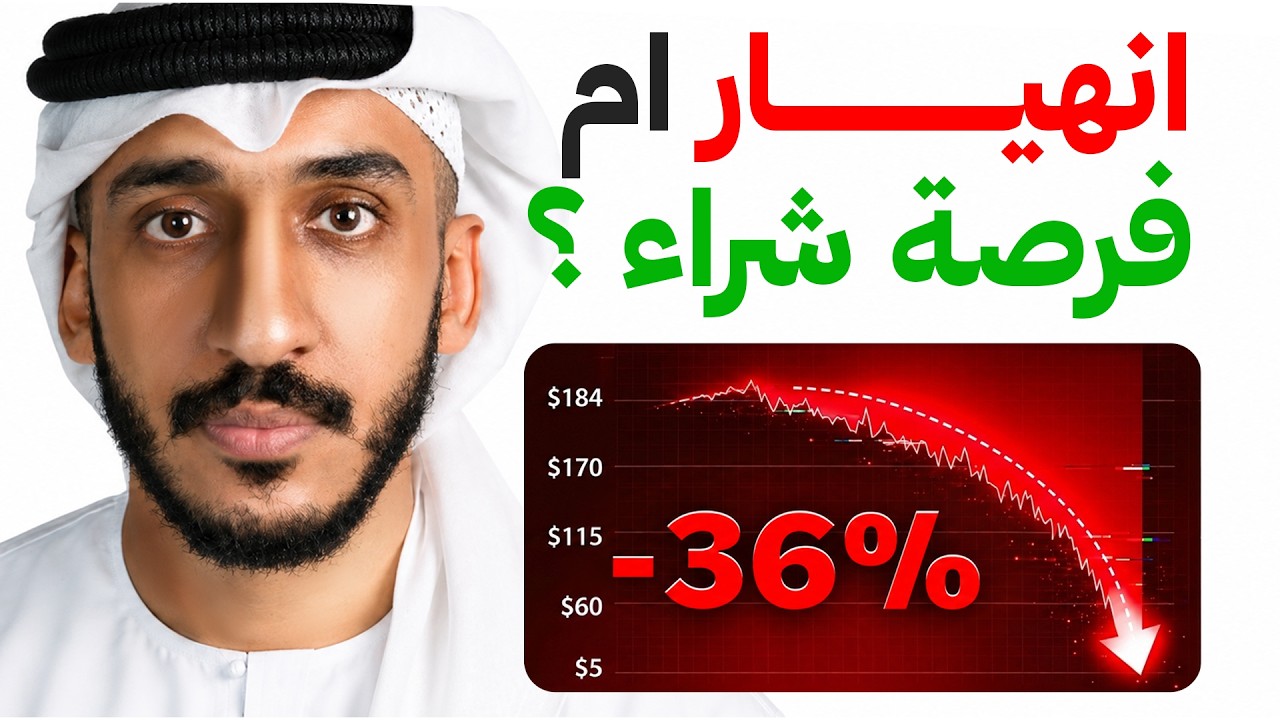
Few moments in investing feel as uncomfortable as watching a holding fall far below the price paid for it, especially when there seems to be no reason at all. Ali Alhamed’s latest video captures that moment in its title, which asks why he sold a stock at a loss after it fell 36% without any negative news. This article is a companion to the video’s subject. It does not summarise the video, name the company or explain the reasons given in it; the video itself is the place for that. Instead, it looks at the general question the title raises: how to think about a falling holding without letting the loss itself make the decision. The 36% in the title belongs to one personal example, not to a pattern anyone should expect.
Why a fall with no news is so confusing
When a company announces bad results or a serious problem, a falling price at least has an explanation. A fall with no visible news is harder. It invites two opposite stories at once: “the market is wrong, so this is a bargain”, or “others must know something that has not been made public”. Neither story can be confirmed just by looking at the chart.
Prices move for many reasons that never appear as a headline: shifts in expectations about a whole sector, changes in interest-rate expectations, large investors adjusting their positions, or a general mood spreading through the market. A share is still a small piece of ownership in a real business, but its price on any day reflects only what buyers and sellers are willing to pay at that moment. The absence of news does not mean the fall is meaningless, and it does not mean it is meaningful either. It means more homework is needed.
The price you paid is not information about the business
One of the hardest habits to break is treating the purchase price as a reference point. Many people find it far easier to sell a holding that is in profit than one that is at a loss, because selling at a loss turns a paper loss into a real one and feels like admitting a mistake. So they wait to “get back to break-even”, even when their view of the business has changed.
The market, however, does not know or care what any individual paid. The amount already lost is gone whatever happens next, and the question that matters is a forward-looking one: knowing what is known today, does this holding still fit the reasons it was bought for? That question has the same answer whether the price is above or below the original purchase.
It also helps to remember the arithmetic. A holding that falls by 36% needs to rise by about 56% just to return to where it was. That does not say what will happen next; it only shows why decisions after a large fall deserve care rather than haste in either direction.
Write down the reason before anything goes in
The simplest protection against panic, and against stubbornness, is to know clearly why a holding was bought in the first place. A short written note is enough: what the business does, why its activity is permissible, what makes it worth owning, and what would have to change for that reasoning to stop holding true.
With that note in hand, a fall becomes a set of questions rather than a feeling:
- Has anything changed in the business itself, or only in its price?
- Is the original reasoning still valid, or was it weaker than it seemed at the time?
- Has the holding grown or shrunk to a size that no longer fits the rest of one’s money?
- Is this money that could be needed soon, and so should never have been exposed to this risk?
Sometimes the honest answers support patience; sometimes they show the original reasoning no longer holds. What matters is that the answer comes from the reasoning, not from the pain of the loss or the hope of recovering it. Only the person who owns the holding, knowing their own situation, can weigh those answers.
Shariah status is part of the reasoning
For a halal investor there is one more question that does not depend on price at all. As the site’s FAQ explains, a company’s debt, revenue sources, activities or financial structure can change, so a stock that was compliant at one point may later become non-compliant, and compliance should be reviewed periodically. Some screening methods measure certain ratios against a company’s market value, so a sharp fall in price can affect the screening result even when nothing else has changed.
When a holding does become non-compliant, the FAQ notes that the right action depends on why. A company changing its core business is different from temporarily exceeding a financial screening ratio, and the investor should follow the divestment and purification rules of the Shariah methodology being used. Where methodologies or scholars differ on the details, it is wise to stay with one clear methodology and to ask a qualified scholar about anything uncertain.
It is also worth remembering that the possibility of loss does not make investing gambling. Legitimate investment naturally carries commercial risk, and accepting a loss is part of that reality, not a sign that something was forbidden.
Losses are part of the process, not the end of it
Investors who last tend to accept that some decisions will turn out badly. What protects them is not avoiding every loss but keeping each one survivable: investing only from the surplus, after commitments and an emergency fund are in place; avoiding interest-bearing borrowing and leverage, which turn an ordinary fall into a far larger danger; and not letting any single holding grow so large that one bad outcome can undo years of steady work.
Seen this way, a loss is also a lesson. Looking back at what the original reasoning missed, without blame, is how judgement improves over time, little by little, without rushing.
What to take away
- A fall with no news is a reason to look more closely, not proof that the price is wrong or right.
- The purchase price says nothing about the business; focus on what is known today.
- Write down why a holding was bought and what would make that reasoning stop holding true.
- Keep Shariah screening up to date, and follow the chosen methodology’s divestment and purification rules if a holding becomes non-compliant.
- Invest only from the surplus and avoid leverage, so that any single loss stays survivable.
- Treat each loss as a lesson about the process, and ask a qualified scholar where rulings differ.
For more on screening, non-compliant holdings and purification, see the halal investing FAQ, and the full video is on Ali’s YouTube channel.