Halal ETFs and the Idea of "Invest and Relax": What to Understand First
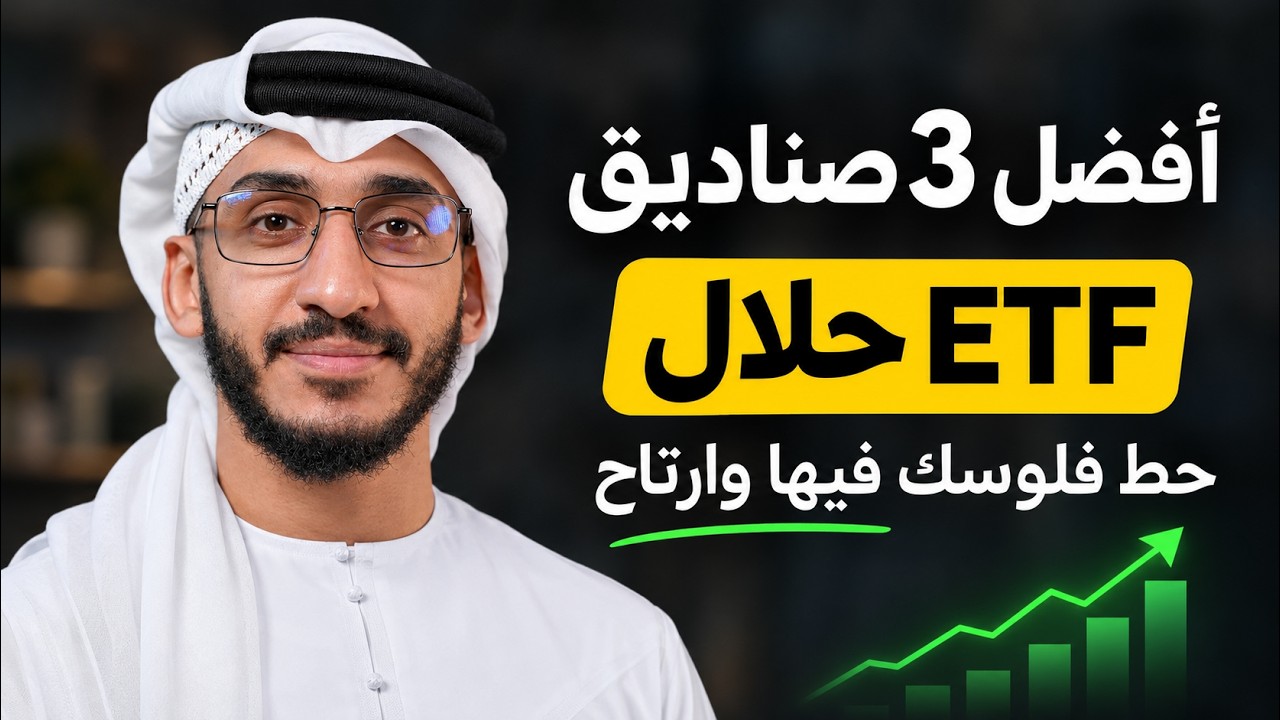
Picking individual companies, reading their accounts and checking their Shariah status one by one takes time that many people simply do not have. That is a big part of why exchange-traded funds, or ETFs, attract so much interest, and why Islamic ETFs in particular come up so often among Muslim investors. Ali Alhamed’s latest video takes up this subject: its title is about three halal ETFs and the idea of putting money into them and being able to relax. This article is a companion to that subject. It does not summarise the video or name any fund; the video itself is the place for what it covers. Instead, it explains in general terms what a halal ETF is, what the “halal” label depends on, and what “relax” can and cannot reasonably mean.
What an ETF actually is
An ETF is a fund that owns a basket of assets, often the shares of many companies, and whose units are bought and sold on a stock exchange much like a single share. Many ETFs follow an index: a published list of companies chosen by set rules. When the index changes, the fund adjusts what it owns to keep matching it.
For the investor, this has some clear practical features. One purchase gives part-ownership in many companies at once, which spreads the risk of any single business doing badly. The fund handles the buying, selling and rebalancing. In return, it charges an annual fee, taken from the fund’s assets, which is worth comparing because it is paid every year whatever the market does.
What an ETF does not do is remove risk. If the companies it owns fall in value, the fund falls with them. Spreading money across many holdings reduces the damage one company can do; it does not protect against a broad market decline.
What makes an ETF “Islamic”
A conventional ETF that follows a broad market index will usually own companies that fail Shariah screening: conventional banks, businesses whose main activity is impermissible, and companies with high levels of interest-bearing debt. That is why the site’s FAQ answers the question “Are ETFs halal?” with: some are, and some are not.
An Islamic ETF normally follows a Shariah-screened version of an index. The screening works in the same two broad steps used for individual shares. First, companies whose core business is impermissible are excluded. Second, the remaining companies are tested against financial ratios, such as how much interest-bearing debt they carry and how much of their income comes from impermissible sources. The guide to halal stock screening explains these screens in more detail.
The fund will also usually name a Shariah board or a Shariah adviser that approves the methodology and reviews the fund. That board is part of what gives the label its meaning.
Why the name alone is not enough
The FAQ is direct on this point: the name alone is not sufficient. A fund calling itself Islamic is a starting point for checking, not the end of it. The things worth reviewing are:
- The Shariah board: who supervises the fund, and whether that supervision is described clearly.
- The underlying index: which index the fund follows, and who screens it.
- The screening methodology: which activities are excluded and which financial thresholds are used. Different standards use different limits, which is one reason two screeners can disagree about the same company.
- The purification process: whether the fund describes how impermissible income inside it is handled, and whether anything is left for the investor to purify.
- The actual holdings: what the fund really owns today, not only what its description says.
- The structure: whether the fund holds the shares directly, or gains its exposure through derivatives, which raises separate questions.
Scholars and screening standards differ on some of these details, such as the exact thresholds and how purification should be calculated. Where a question is not clear, it is worth asking a qualified scholar rather than assuming.
What “relax” can reasonably mean
There is real value in the idea behind “invest and relax”. A long-term investor who owns a broad, screened fund does not need to watch prices every day, react to every headline or keep trading in and out. Avoiding constant activity also avoids many of the mistakes that come from fear and haste. That fits a principle Ali returns to often: little by little, don’t rush.
Relaxing, however, is not the same as forgetting. A few things still deserve attention:
- Prices will move. Any fund that owns shares can fall, sometimes sharply, and stay down for a long time. No fund can promise a return, and past performance says nothing certain about the future.
- Compliance can change. The FAQ notes that a company’s debt, income and activities can change over time, which is why screening has to be repeated. Screened indexes are reviewed periodically for the same reason, but the fund’s own reports are still worth reading now and then.
- The fund has to fit the person. A fund suited to money that can stay invested for many years is not a place for money that may be needed next month. Many people keep an emergency buffer in cash before investing at all.
- Fees add up. A small annual difference in fees becomes a noticeable difference over a long period.
In other words, the “relax” part works best when the homework has been done before the money goes in, and when a short, calm review happens from time to time.
What to take away
- An ETF is a basket of holdings traded like a share. It spreads risk across many companies but does not remove market risk.
- A conventional broad-market ETF is usually not Shariah-compliant. An Islamic ETF follows a screened index and is supervised by a Shariah board.
- The label is where checking begins: look at the board, the index, the screening rules, the purification process, the actual holdings and the structure.
- Understand your own goals and time horizon before choosing any fund, and keep money you may need soon outside the market.
- Investing for the long term can be calm, but a periodic review of compliance, fees and fit is still part of it.
- Where scholars differ, or something is unclear, ask a qualified scholar.
For short answers on ETFs, indexes and purification, see the Halal Investing FAQ, and for more of Ali’s lessons, visit his YouTube channel.