A High Salary Is Not Wealth: Building Assets Without a Loan
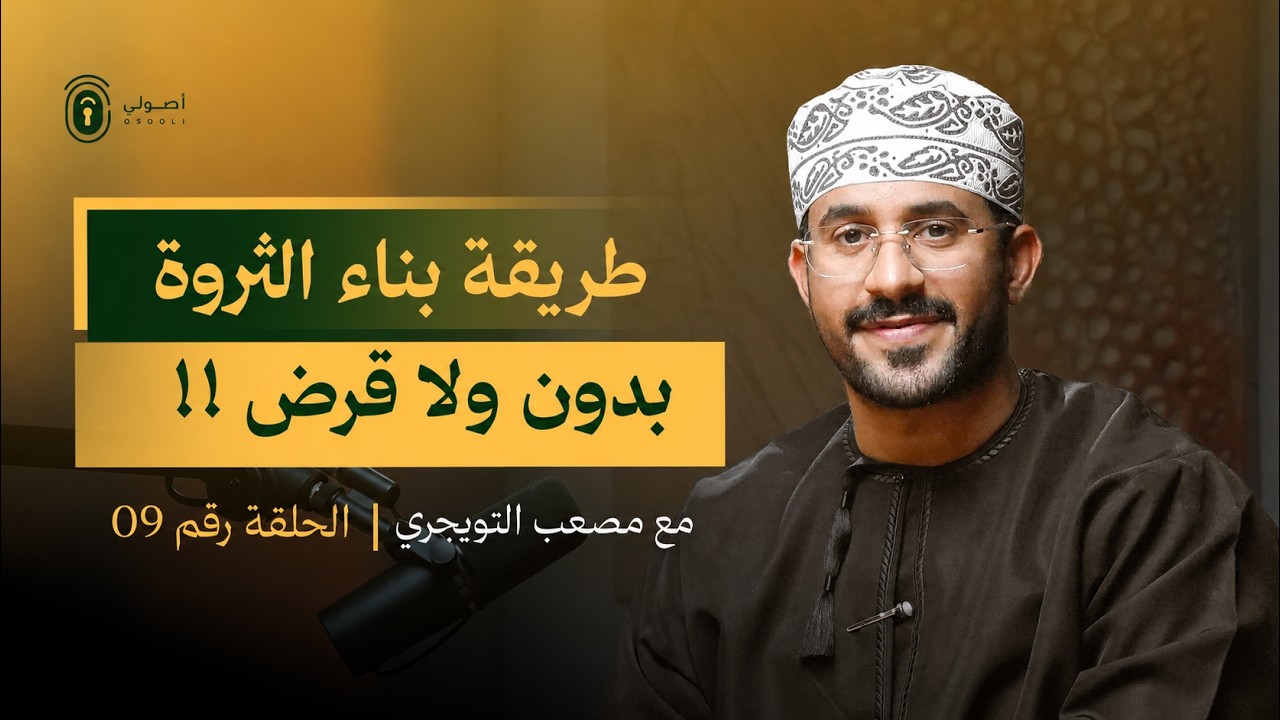
A good salary can feel like the finish line. The money arrives every month, the bills are paid, and something is left over. Yet many people with comfortable incomes look back after years of work and find they own very little. A recent podcast episode on Ali Alhamed’s channel asks a question aimed at exactly this situation: your salary is high and you have a surplus every month, so how do you build wealth without a loan? According to its description, the episode is meant for anyone who already has an income and a monthly surplus and wants to understand how to shorten the path to building assets, instead of gathering them alone over many long years. It is not for someone looking for quick profit. This article is a companion to that question. It does not summarise the conversation; it looks at why income and wealth are different things, and why building without borrowing is worth thinking through carefully.
Income is a flow, wealth is what stays
A salary is a flow of money that stops when the work stops. Wealth is what remains and keeps working: assets that hold value or produce income of their own. Two people on the same salary can end up in very different places, depending on what happens to the money after it arrives.
This is why a high income alone does not settle anything. When income rises, spending often rises with it: a bigger home, a newer car, more frequent travel. None of these is wrong in itself, but if every increase in income is matched by an increase in spending, the surplus never grows and nothing is built. The monthly surplus, not the salary, is where wealth begins. A smaller income with a steady surplus can build more over time than a large one that is fully spent.
Why the question of a loan comes up
People with a strong, stable income are often the ones most easily offered credit. Banks and lenders see a reliable salary and are willing to lend against it. That makes borrowing to speed things up feel natural: a loan to invest sooner, to buy a larger asset, or to “leverage” the income.
From a Shariah point of view, the first issue is plain. Riba is prohibited, and a conventional loan that must be repaid with interest falls under it. Borrowing at interest to buy shares, known as margin trading, is described in the site’s FAQ as haram for the same reason, and leverage built on an interest-bearing loan carries the same problem.
There is also a practical issue. Debt must be repaid whatever happens to the investment it paid for. If the asset falls in value, or income is interrupted, the repayments do not pause. What looked like a way to move faster can turn an ordinary setback into a long recovery, and the years spent repairing that damage are years not spent building.
Building from the surplus instead
Building without a loan means growing assets from money that is already owned. It can feel slower at first, but it carries a quieter kind of strength: nothing owned can be called back by a lender, and a difficult period does not force a sale at the worst moment.
In practice, this usually rests on a few habits:
- Knowing the surplus. Tracking what comes in and what goes out shows the real amount left each month, which is often different from what people assume.
- Protecting it from lifestyle creep. Deciding in advance what share of any pay rise goes to building, before it quietly becomes new spending.
- Paying the surplus first. Moving the amount set aside for building as soon as the salary arrives, rather than investing whatever happens to be left at the end of the month.
- Keeping an emergency fund separate. Money for sudden needs is not invested, so an urgent expense never forces the sale of assets.
- Reinvesting what assets earn. Letting returns stay invested instead of spending them is how growth builds on itself over time.
Shortening the path the halal way
The episode’s description speaks of shortening the path rather than building alone over many years. Without debt, the honest ways to do that are mostly about removing waste: money sitting idle for long periods, avoidable mistakes, and decisions made without understanding.
Learning from people with more experience is one of those ways. So is partnership in the Islamic sense, where each side contributes capital or work and shares profit and loss by agreed terms, rather than one side being promised a fixed return on capital that cannot be lost, which would turn the arrangement into an interest-bearing loan. Some Islamic financing contracts, such as sale or lease-based structures, work differently from a conventional loan; the FAQ notes that such contracts may produce a predetermined return without being an interest-bearing loan. The details matter, and scholars differ on some of them, so where a structure is unclear it is wiser to ask a qualified scholar than to assume.
Whatever approach is followed, screening still applies. For shares, both the company’s core business and its financial structure need checking, and some income may need purification.
Patience over pressure
A high salary can create its own pressure: the feeling that, with so much coming in, results should arrive quickly. The description is clear that the episode is not for anyone seeking quick profit. Ali’s familiar rule fits here: little by little, don’t rush. Any numbers or examples shared in the episode are personal experiences and illustrations, not results anyone should expect to repeat, and every investment carries risk.
What to take away
- Treat salary as a flow and assets as what stays. Measure progress by what is owned, not by what is earned.
- Know the real monthly surplus, and decide ahead of time how much of any raise goes to building.
- Set the building amount aside first, and keep an emergency fund apart from investments.
- Remember that riba is prohibited, and that borrowing at interest to invest also adds risk that must be repaid regardless of results.
- Learn how halal partnership and Islamic financing contracts differ from a conventional loan, and ask a qualified scholar about anything unclear.
- Build steadily from what is already owned, and let patience do its work.
For answers to common questions on interest, leverage and screening, see the halal investing FAQ, and the full episode is on Ali’s YouTube channel.